
Section 44 & Madrid Protocol Filings
US Trademarks for International Brand Owners
You already own the mark at home. That registration stops at your border. If you are selling into the United States, or about to, your brand is unprotected here — and US law will not wait for you to notice.
We convert foreign trademark rights into US registrations for owners in the EU, the UK, Canada, Australia, India, and beyond. Flat fee, quoted upfront, in English.
- Attorney-guided
- Flat fee
- Nationwide service
See pricing and what’s included
Avvo Clients’ Choice Award, 2026Avvo confers this award based on client reviews submitted to Avvo. A prospective client may not obtain the same or similar results.
“Attorney McCarthy is very knowledgeable and supportive during every step of the process.”
A prospective client may not obtain the same or similar results.
Already decided? Pay and get started
Start your US filing
Tell us about your existing registration. We usually reply the same business day.
Book a free 30-minute callThank you — your message has been sent.
Our team will be in touch shortly. If you would rather pick a time now, book a consultation directly.
Book a ConsultationYou’re not hiring a filing service.You’re working with an attorney.
Legacy Path Law focuses on nonprofit, business, and intellectual property law. Your matter is handled by an attorney — not simply an online filing platform.
The attorneys who will handle your filing
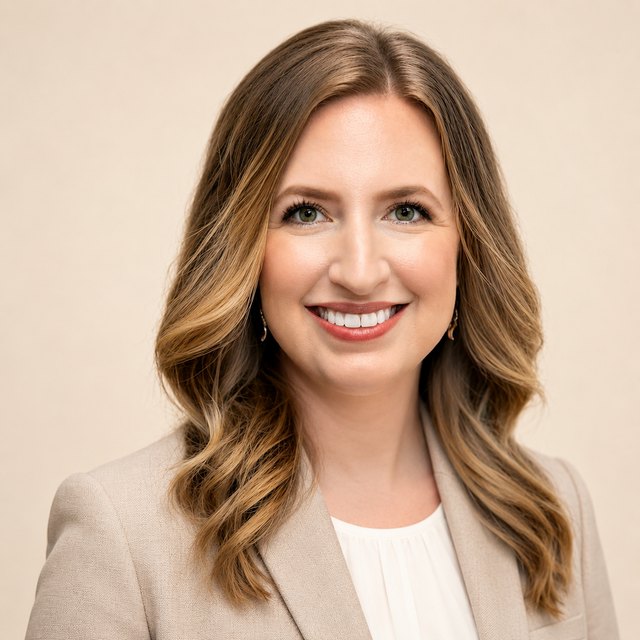

Founding partners Breanna McCarthy and Channing Thomas handle trademark matters before the USPTO every week. Before private practice, Breanna processed trademark and business filings at the Kansas Secretary of State’s office.
Your application is prepared and filed by an admitted attorney, not a form-filling service.
US Trademark Filing
- Review of your foreign registration or application
- Confirmation of the strongest filing basis for you
- Priority claim filed if the six-month window is open
- Comprehensive US clearance search
- Goods and services rewritten to USPTO standards
- Certified copy and translation requirements handled
- Application prepared, filed, and monitored
- Office Action responses included
- US counsel of record, as USPTO rules require
Flat fee per class • quoted upfront • no surprise add-ons
Already know which package you want? Pay and get started
What this fee does not cover: contested proceedings and litigation. Oppositions, cancellations, and appeals before the Trademark Trial and Appeal Board (TTAB), and any court action, are outside this flat fee and are quoted separately before any such work begins.
Who this is for
You already own the mark at home. That registration stops at your border, and the route into the US depends on what you hold and where.
A foreign brand owner entering the US.
- You hold a registration or application in your home country
- Selling into the US, or about to, including through a marketplace
- You want to rely on a home registration under Section 44 or the Madrid Protocol
- A US distributor, retailer, or platform has asked for a US registration
- You are unsure whether Madrid or a direct US filing serves you better
A different route applies.
- You are a US business filing domestically — see trademark registration
- You filed in the US and want it reviewed — see application review
- A USPTO refusal has arrived — see office action response
- A US registration needs maintaining — see renewals
- Ownership sits with a different entity — see assignment
Foreign-domiciled applicants must be represented by a US-licensed attorney before the USPTO. That is a rule, not a preference.
Your foreign registration does nothing in the United States
Trademark rights are territorial. A mark registered with the EUIPO, the UKIPO, CIPO, IP Australia, or any other national office confers rights in that territory and nowhere else. There is no global trademark, and there is no treaty that makes your home registration enforceable against an American company.
What that means in practice is uncomfortable: while your foreign registration sits in force, someone in the United States can adopt your mark, apply to register it, and get there first. If they do, you are the one who has to fight — from abroad, in a US forum, usually at several times the cost of simply having filed.
The good news is that US law gives foreign owners a genuine advantage, and most owners never use it. You can reach US registration on the strength of your existing foreign rights, without ever proving you have sold a thing in the United States. A domestic applicant cannot do that.
You are legally required to have a US attorney
Since August 2019, USPTO rule 37 CFR 2.11 has required every applicant, registrant, and party whose domicile is outside the United States to be represented before the USPTO by an attorney licensed to practice law in the United States. Canadian filers are included. Your local trademark agent, however experienced, cannot sign or prosecute your US application.
“Foreign-domiciled” means an individual whose permanent home is outside the US, or an entity whose principal place of business — the headquarters where its senior officers direct and control it — is outside the US. A US mailing address or a registered agent does not change that.
The requirement bites even if you came in through the Madrid Protocol and never intended to hire anyone. The moment the USPTO issues a refusal on your extension of protection, you need US counsel to respond, and the response deadline is already running.
Three Routes Into the US Register
Which one is right depends on how long ago you filed at home, whether your foreign mark has actually registered, and how much of the world you are protecting at once.
Section 44(d) — Priority
You filed abroad within the last six months. Your US application claims the foreign filing date as its own, backdating you ahead of anyone who filed in the US during that gap. It is a priority claim, not a basis for registration on its own, so it pairs with intent to use or with the foreign registration once it issues.
Section 44(e) — Foreign Registration
Your mark is already registered in your country of origin. That registration becomes your basis for US registration. No specimen, no proof of American sales, no waiting to launch. You submit a copy of the foreign registration and a verified statement that you intend to use the mark in US commerce.
Section 66(a) — Madrid Protocol
You designate the United States through WIPO as part of an international registration. The USPTO examines it like any other application and either registers it or issues a provisional refusal. Efficient across many countries at once, but tied to your home mark for five years.
Direct Filing or Madrid?
The trade-off is cost across many territories versus durability in the one that matters.
| Consideration | Madrid Protocol — Section 66(a) | Direct US Filing — Section 44 |
|---|---|---|
| How you file | Through WIPO, designating the US | Directly with the USPTO |
| Tied to your home mark | Yes, for five years. If the home mark falls, the US extension falls with it | No. Independent from the day it is filed |
| Goods and services | Locked to the international registration. Cannot be broadened later | Drafted for the USPTO from the start |
| Adding classes later | Requires a new designation | File a new US application at any time |
| Assigning the mark | Restricted. The assignee must be eligible under Madrid | Assignable to anyone, like any US registration |
| Maintenance filing | Section 71 declaration | Section 8 declaration |
| Best when | You are protecting a dozen markets at once and the US is one of many | The United States is a market you intend to build in |
If your Madrid designation has already been refused, that is not a dead end — see below.
The six-month priority window
This is the deadline foreign owners most often lose without knowing it existed. Under Section 44(d), a US application filed within six months of your first foreign application for the same mark and the same goods takes that foreign filing date as its US filing date.
You file your first application at home.
The clock starts here, on your earliest foreign filing — not on the date it registered.
You file in the US and claim priority.
The USPTO treats your US application as though it had been filed on Day 0. Anyone who filed in the US in between is now behind you.
Priority is gone permanently.
You can still file — under Section 44(e) or on intent to use — but your date is the date you actually file, and any US application filed before it outranks you.
If you filed at home in the last six months, this is time-sensitive. Send us the filing date.
What Section 44(e) gets you that a US applicant cannot have
A domestic applicant has two options. Prove current use of the mark in US commerce, or file on intent to use and then come back later with a specimen and sworn dates of first use before anything registers. Either way, no use means no registration.
Section 44(e) removes that. With a registration from your country of origin, you can obtain a US registration without ever having sold into the United States. You sign a verified statement of bona fide intention to use the mark here, and that is the requirement met.
The practical effect is that you can secure your US rights before you enter the market rather than after, at the point when the mark is cheapest to protect and no one has adopted it yet.
Three conditions attach, and each one has ended applications that ignored it:
- The registration must be from your country of origin
- The mark must be the same mark
- It must still be in force when the US mark registers
Country of origin means where you are domiciled, incorporated, or organized, or where you have a real and effective industrial or commercial establishment. A registration obtained in a convenient third country will not do.
Where these filings go wrong
The goods and services description. This is the single largest source of refusals for foreign applicants. Most trademark offices accept broad class headings — the USPTO does not, and requires a level of specificity that your home specification almost certainly does not have. At the same time, your US identification can never be broader than what the foreign registration covers. Getting caught between those two constraints, after filing, is expensive. Drafting for both at the outset is not.
Translation and certification. If your foreign registration is not in English, the USPTO needs a translation. The copy you provide has to be a true copy, a photocopy, a certification, or a certified copy issued or certified by the IP office in your country of origin. A screenshot of the online register is not that.
The owner name does not match. Foreign registers and the USPTO record entity names, legal forms, and addresses differently, and a mismatch between the applicant and the foreign registrant will be questioned. If the mark moved between group companies at home and the assignment was never recorded, that surfaces here.
The mark is not quite the same mark. A logo redrawn for the US market, a stylization dropped, a tagline added — any of these can break the Section 44(e) link and leave you with no registration basis at all.
Central attack on a Madrid designation. For five years from the date of the international registration, your US extension depends on the home mark. If the basic application or registration is cancelled, restricted, or successfully opposed in that period, the same fate reaches the US. There is a transformation remedy that converts the extension into a national US application, but it is time-limited and it is not automatic.
Assuming you will be reminded. USPTO correspondence goes to the attorney of record. If there is no attorney of record, or the address on file is stale, deadlines pass in silence and the application is abandoned without anyone telling you.
If the USPTO has already refused your Madrid designation
A provisional refusal on a Section 66(a) extension is not a rejection of your brand. Most are ordinary examination objections — the identification of goods is too broad for US practice, the mark is considered descriptive, a prior US application is cited against you, or a disclaimer is required.
All of them are answerable, and all of them require a US attorney to answer. The deadline runs from the date of the Office Action, not the date WIPO forwarded it to you, which is why these arrive with less time remaining than owners expect.
Send us the refusal and your international registration number. We will tell you what is actually being objected to, how long you have, and what a response costs, before you commit to anything. If you would rather see the full process, our Office Action response page sets it out.
Keeping the Registration Alive
You did not have to prove use to register. You do have to prove it to keep the registration.
Years 5–6
A declaration of use with a specimen. Section 8 for a Section 44(e) registration, Section 71 for a Madrid extension. A six-month grace period follows, with a surcharge. Miss both and the registration is cancelled.
Every 10 years
Renewal, combined with the declaration of use. Same grace period, same consequence for missing it.
Section 15, optional
After five continuous years of use you can file for incontestability, which narrows the grounds on which anyone can later challenge your mark.
We track these dates for marks we file. See trademark renewals for what each filing involves.
International Filing Questions
Does my foreign trademark registration protect me in the United States?
No. Trademark rights are territorial. A registration in the EU, the UK, Canada, India, Australia, or anywhere else gives you no rights in the United States. Someone in the US can register your mark while your foreign registration sits there doing nothing about it. The only way to hold US rights is a US registration or genuine use of the mark in US commerce.
Do I need a US attorney to file?
Yes, if you are foreign-domiciled. Since August 2019, USPTO rule 37 CFR 2.11 requires every applicant, registrant, and party whose domicile is outside the United States to be represented by an attorney licensed to practice in the United States. That includes Canadian filers. It applies to a Madrid extension of protection the moment the USPTO issues any refusal. It is not optional, and the USPTO will not process your filing without it.
Do I have to be using the mark in the United States before I can register?
Not if you file under Section 44(e) or Section 66(a). Both let you reach registration on the strength of your foreign rights, without ever submitting a specimen of US use. You do have to sign a verified statement of bona fide intention to use the mark in US commerce. This is the single biggest advantage foreign owners have over domestic applicants, who must prove actual use before anything registers.
What is the six-month priority window?
Under Section 44(d), if you file your US application within six months of your first foreign application for the same mark and the same goods or services, the USPTO treats your US filing date as though it were the foreign filing date. That backdating can put you ahead of anyone who filed in the US during those six months. Miss the window and the priority claim is gone for good.
What is the difference between filing directly and going through the Madrid Protocol?
A Madrid designation of the United States is administered through WIPO and stays tied to your home registration for five years, so if the home mark falls the US extension falls with it. A direct Section 44 filing is a standalone US application from day one, independent of what happens at home, and it is examined without the extra layer of WIPO correspondence. Madrid is often cheaper when you are designating many countries at once. Direct filing is usually the better choice when the United States is the market that matters.
What does the $1,500 cover?
It covers a full clearance search, the correct US classification of your goods and services, preparation and filing of the application, monitoring, Office Action responses, and the USPTO filing fee for one class. If your mark covers more than one class, the fee is $1,500 per class. There is no separate charge for handling the foreign registration certificate, the translation requirement, or the priority claim.
Why does the USPTO object to my list of goods and services?
Most trademark offices accept broad class headings. The USPTO does not. It requires goods and services to be identified with a level of specificity that many foreign registrations never contemplated, and your US identification can never be broader than what your foreign registration covers. Reconciling a broad European or Asian specification against the US Trademark ID Manual is the most common reason these applications receive an Office Action, and it is work best done before filing rather than after.
My Madrid extension was refused by the USPTO. Can you help?
Yes. A provisional refusal on a Section 66(a) extension is handled the same way as any US Office Action, and you will need US counsel to respond. Send us the refusal and the international registration number and we will tell you what is being objected to, what the deadline is, and what it will cost to answer.
What happens after the mark registers?
You have to prove use eventually, even though you did not have to prove it to register. A Section 44(e) registration requires a Section 8 declaration of use between the fifth and sixth anniversary of registration, then a combined Section 8 and Section 9 renewal every ten years. A Section 66(a) extension follows the same schedule but uses a Section 71 declaration instead. Miss either one and the registration is cancelled.
Can you work with my trademark attorney at home?
Yes, and we often do. Foreign counsel stay on the file, we act as US attorney of record, and correspondence runs whichever way suits you. We are equally happy working directly with the brand owner.
How long does it take?
USPTO examination timelines move, so we will give you a current estimate rather than a number that ages badly. Expect several months to a first examination decision, longer if an Office Action issues. A priority claim under Section 44(d) does not speed up examination — it protects your place in line, which is a different and more valuable thing.
Does the fee cover an opposition, a cancellation, or a TTAB appeal?
No. The flat fee covers the filing work described above and ordinary examination correspondence with the USPTO. It does not cover contested proceedings — oppositions, cancellations, or appeals before the Trademark Trial and Appeal Board — and it does not cover litigation in any court. Those are adversarial matters with their own timelines and costs. If one arises we will tell you what is happening and quote that work separately, in writing, before it starts.
Related Reading
How to Check Whether a Trademark Is Available
How to Choose a Trademark the USPTO Will Actually Register
Your Registration Covers What You Listed, Not What You Sell
What Clients Say
Client Review
We came to Legacy Path after experiencing significant difficulties with another firm, including important work that had not been properly completed. Legacy Path stepped in, carefully reviewed what had been done, identified the outstanding issues, and took the necessary action to bring the matters to completion.
What impressed me most was their willingness to take ownership of the process. Rather than making excuses or focusing on the problems created by the previous firm, they focused on solutions, communication, and getting the work done correctly.
Their team has been professional, knowledgeable, responsive, and dependable throughout the entire process. After the experience we previously encountered, it was refreshing to work with a law firm that understands the importance of accountability and client service.
I am extremely pleased with the service we received and sincerely appreciate Legacy Path Law Firm for stepping in and successfully completing work that had previously been left unresolved.
I would confidently recommend Legacy Path Law Firm to anyone looking for a legal team that follows through on its commitments and genuinely takes care of its clients."
Client Review
She took the time to explain complex legal matters in plain language, making sure our board understood every step before moving forward. Her work gave us confidence that our organization was structured correctly and positioned for future growth.
I would highly recommend Breanna to any nonprofit or business looking for an attorney who is professional, thorough, and a trusted advisor. We truly appreciate everything she did to help Latino Professionals in Aerospace get off the ground legally and set us up for long term success."
Client Review
What I appreciate most is that she's not only incredibly knowledgeable, but also someone I genuinely trust. Anytime a legal question comes up, she's my first call. She takes the time to explain everything clearly, provides practical advice, and always has my best interests in mind.
Having someone in your corner who is responsive, professional, and truly invested in your success is invaluable. Breanna has been exactly that for me, and I wouldn't hesitate to recommend her to anyone looking for an outstanding attorney."
Client Review
Breanna is also thoughtful, strategic, and consistently focused on delivering the highest quality work. I would recommend her without hesitation to any organization seeking exceptional legal counsel."
Client Review
Breanna made difficult administrative tasks seem easy, and all of this with a smile. She was a trusted resource for our work, and I'm happy to highly recommend her to others."
Client Review
Client Review
Client Review
The testimonials on this page reflect the experience of those individual clients. Every matter is different, and a prospective client may not obtain the same or similar results.
Protect the brand in the market you are entering.
Send us your foreign registration or application number. We will tell you which filing basis you qualify for, whether your priority window is still open, and what it costs.
Already decided? Pay and get started